Success Feed
Student Experience
Homepage
Alumni Success


A partnership project uniting pre-allied health/pre-physical therapy and engineering students with Yellow Jacket soccer players explored injury prevention of the anterior cruciate ligament (ACL).
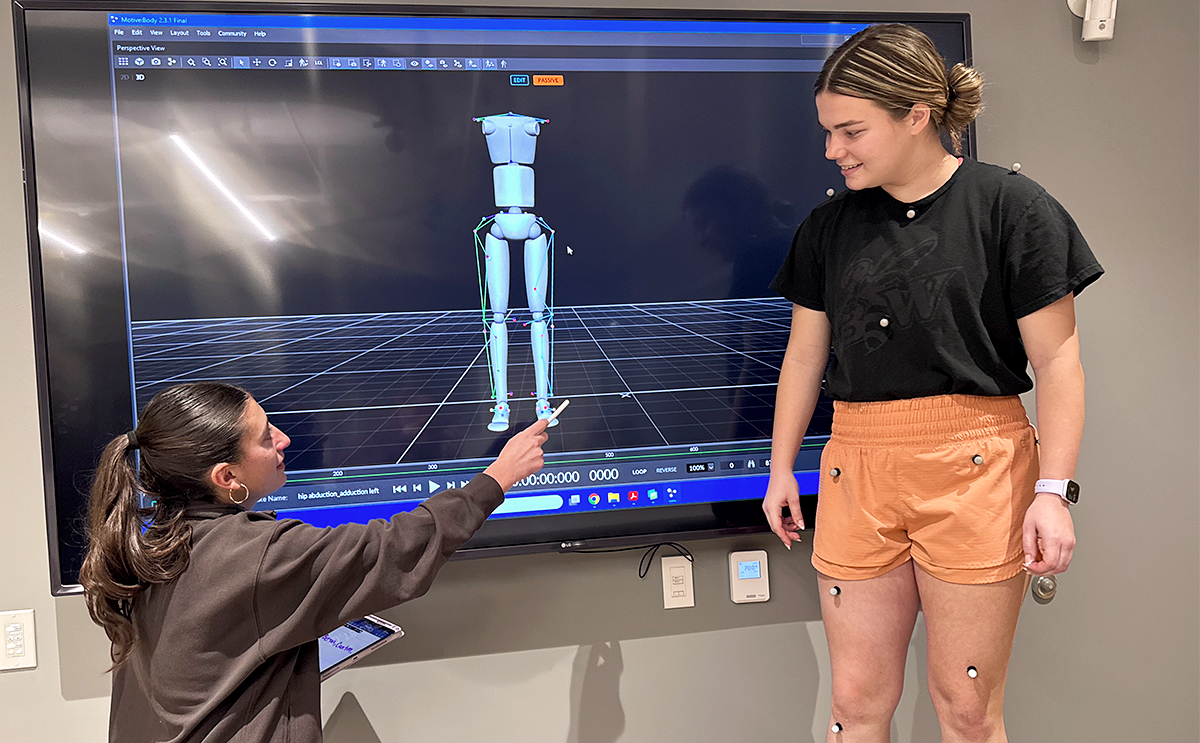
The research study, which began in the fall and continued in the spring semester, had the goal of better understanding how certain soccer movements may lead to potential injury for athletes.
The research team was comprised of three student-athletes from the women's soccer team and Dr. Alexander Morgan, BW assistant professor in pre-allied health/pre-physical therapy.
The ACL is a crucial ligament in the knee that provides stabilization when a person is jumping and changing direction during movement. This injury, which can be common for soccer players, requires surgery and a healing process that can take up to nine months.
The BW study examined the factors that may increase the risk of ACL injuries in soccer players – comparing the movement patterns of both male and female collegiate players.
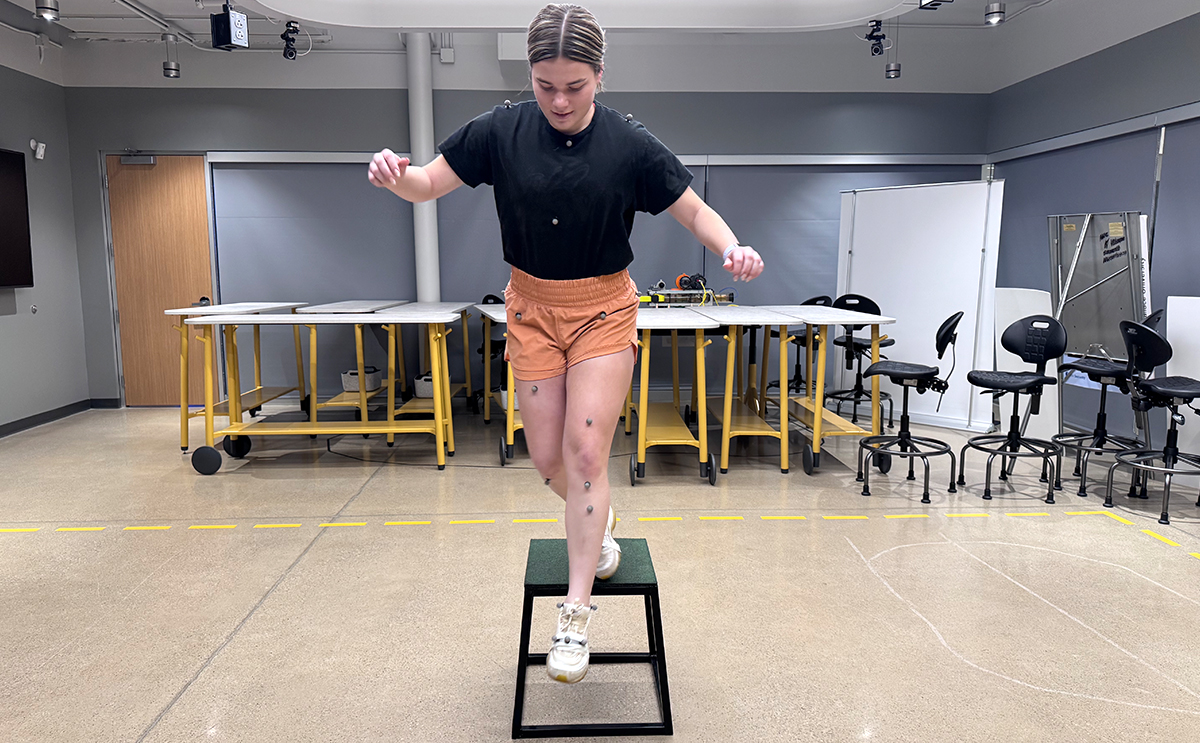
According to Kalyn Rich '27, an exercise science major involved in the project, the research project looked at the nondominant leg of each participant through a single-leg cross drop in a motion analysis lab.
The single-leg cross drop, she explained, is when a participant drops from a box while crossing one leg over the other, landing on the opposite leg the person was standing on. This drop, said Rich, mimics lateral movements that commonly occur during soccer and are associated with non-contact ACL injuries.
The BW study looked at this movement through the lens of trying to understand factors affecting gender differences in risk for injury. Aiding in the study was the BW motion analysis lab, which enabled the three students to observe the knee position and trunk movements of a research subject using reflective markers during jumping. As the subject landed, a force plate on the ground recorded how hard the person landed.
Among the many benefits of the study was the ability of students to put new knowledge into practice.
"The single-leg cross drop is a new drop being used in biomechanical studies," noted Kelly Carver '27, a pre-allied health and exercise science major from Buffalo, New York. "We were made aware of this drop over the summer when we attended the American Society of Biomechanics conference in Pittsburgh.
Carver, who plans to become a physician assistant, believes the BW opportunity offers outstanding career preparation, research experience and faculty mentoring.
While Rich and Carver each brought a health sciences background to the research, BW student Mia Fourtounis '27 of Hinckley, Ohio, brought an engineering perspective.
"From this project, I was excited to work with others outside my engineering cohort. I do a lot of projects in my major and often with the same people. It helped me learn how to collaborate with individuals from different educational backgrounds," remarked Fourtounis, an aspiring biomedical engineer.
For Rich, who wants to pursue a career in occupational therapy, the project also had a personal connection. The Lynchburg, Ohio, resident sustained an ACL injury playing soccer.
"This study allowed me to connect my personal experience with my academic knowledge, making it especially meaningful to me. I have a deeper appreciation for the physical and mental challenges an athlete faces during recovery. This allowed me to contribute firsthand perspectives to the research," explained Rich.
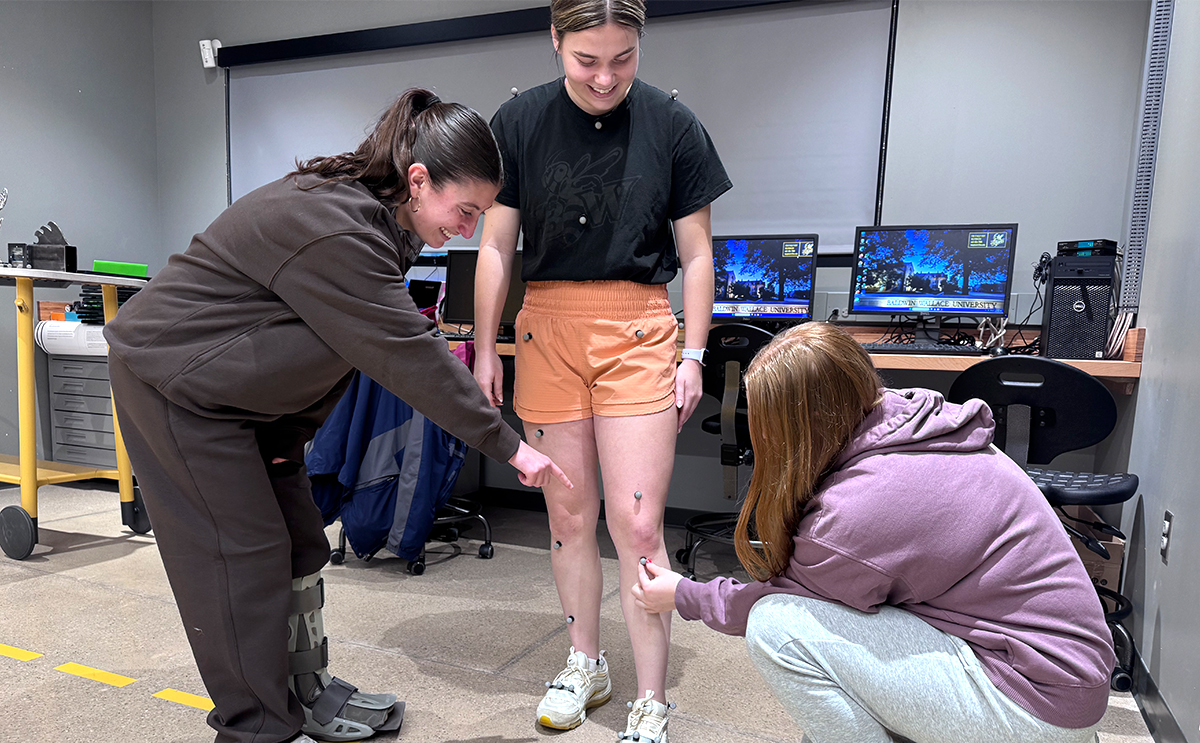
Morgan emphasized the importance of studying ACL risk because female athletes are up to eight times more likely to incur that type of injury than male athletes.
"As a researcher, I wanted to learn more about what was causing this persistent issue in sports," remarked Morgan. "Though it was (and still remains) a major area of focus in the research community, there is always more that can be done. This is particularly true for women's athletics," he emphasized.
Morgan and the research students hope their findings will provide educational information that can help athletes lower their risk for ACL injuries and assist allied health professionals and coaches in understanding how screening tools can be used to assess the risk for ACL injury.