Success Feed
Student Experience
Homepage
Alumni Success

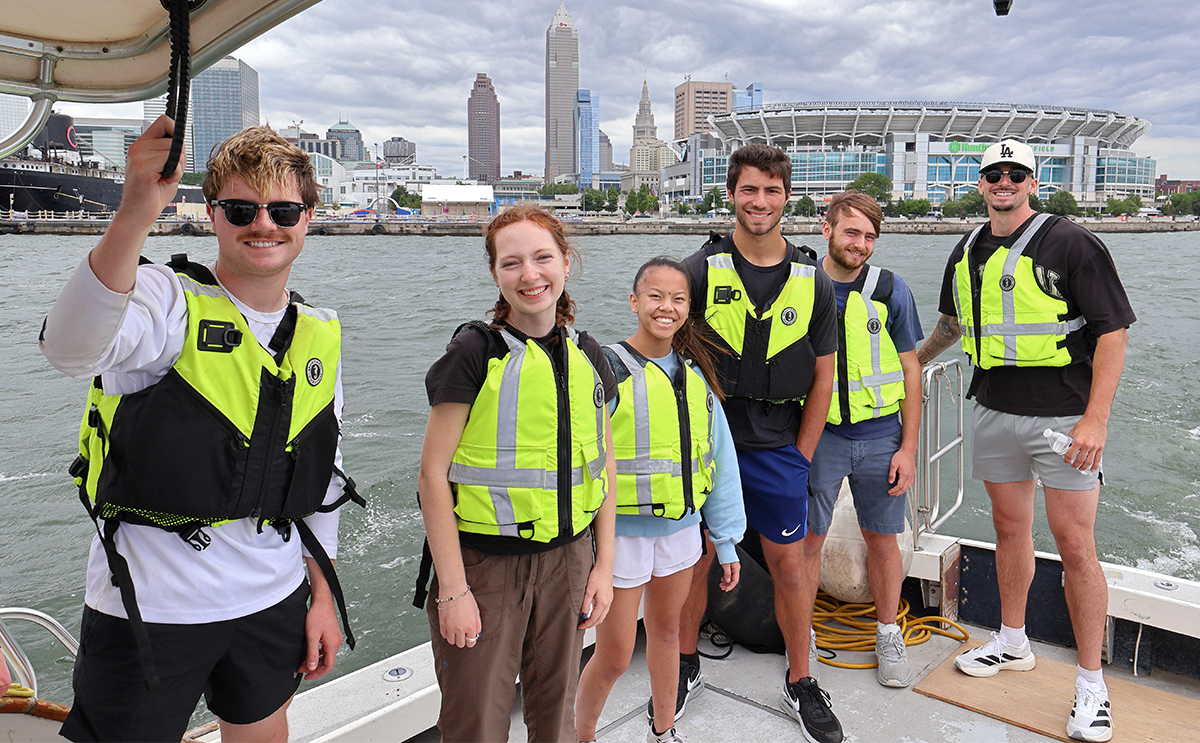
Seven BW undergraduates and a Princeton University intern are taking a deep dive into Lake Erie. Not literally, of course — but through grant-funded research showcasing why Baldwin Wallace's engineering program is an impressive regional resource.
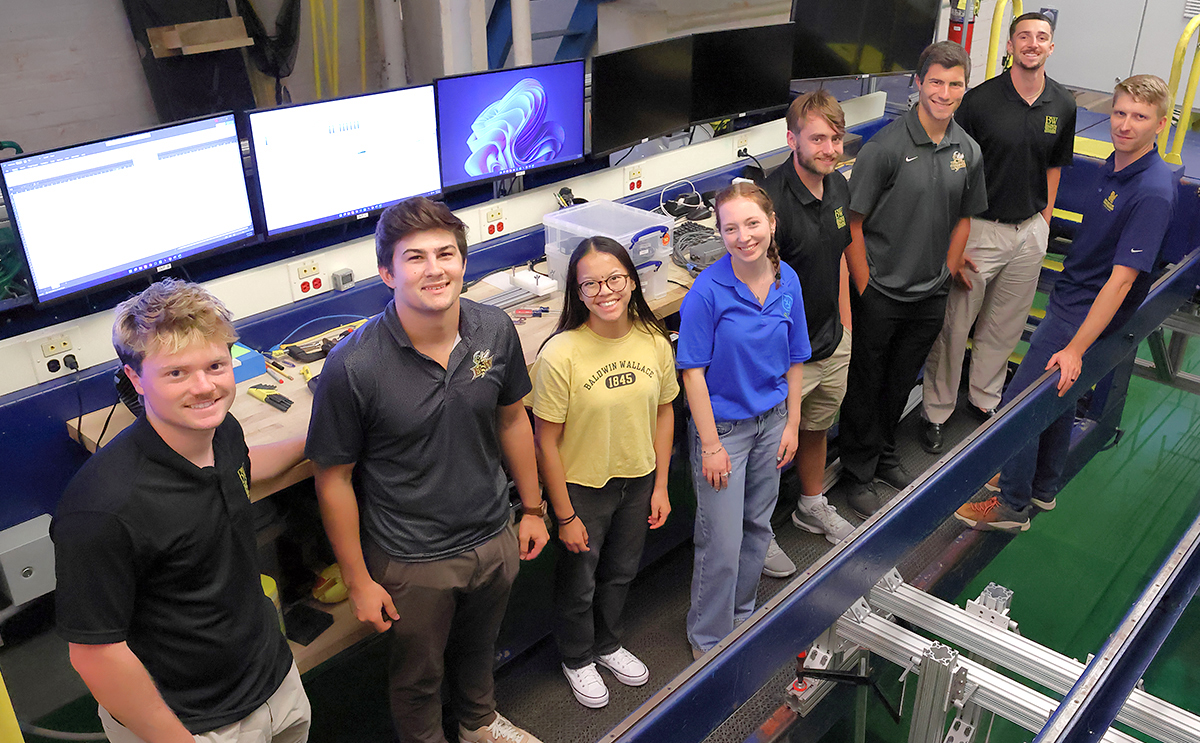
The three grant-funded projects include:
The projects, under the direction of Drs. Jeff Dusek and Jonathon Fagert, are part of new and ongoing initiatives that make BW's engineering major a standout for hands-on and real-world-focused learning.
Both the mobile wave tank and CLEAR projects began in 2025. When the initial groups of student researchers working on the projects graduated in May, new individuals were added to the projects to build on their predecessors' success.
BW students Connor Awad, Ryan Wodzisz and Brynn Bonnell are focusing their summer studies on designing and testing a mobile wave tank that can be used for teaching and outreach. The portable wave tank will have a computer-controlled wave maker at one end, a demonstration wave energy converter device and a "beach" at the other end to absorb waves.
Bonnell, an engineering major, is excited about the experience she has gained through the project. "Working closely with faculty on a hands-on project converts learning from a passive lecture into active problem-solving. Instead of just studying concepts in a book, we are right there in the lab testing hypotheses, optimizing designs and getting immediate feedback. It makes our education at BW practical, collaborative, and much more engaging," she believes.
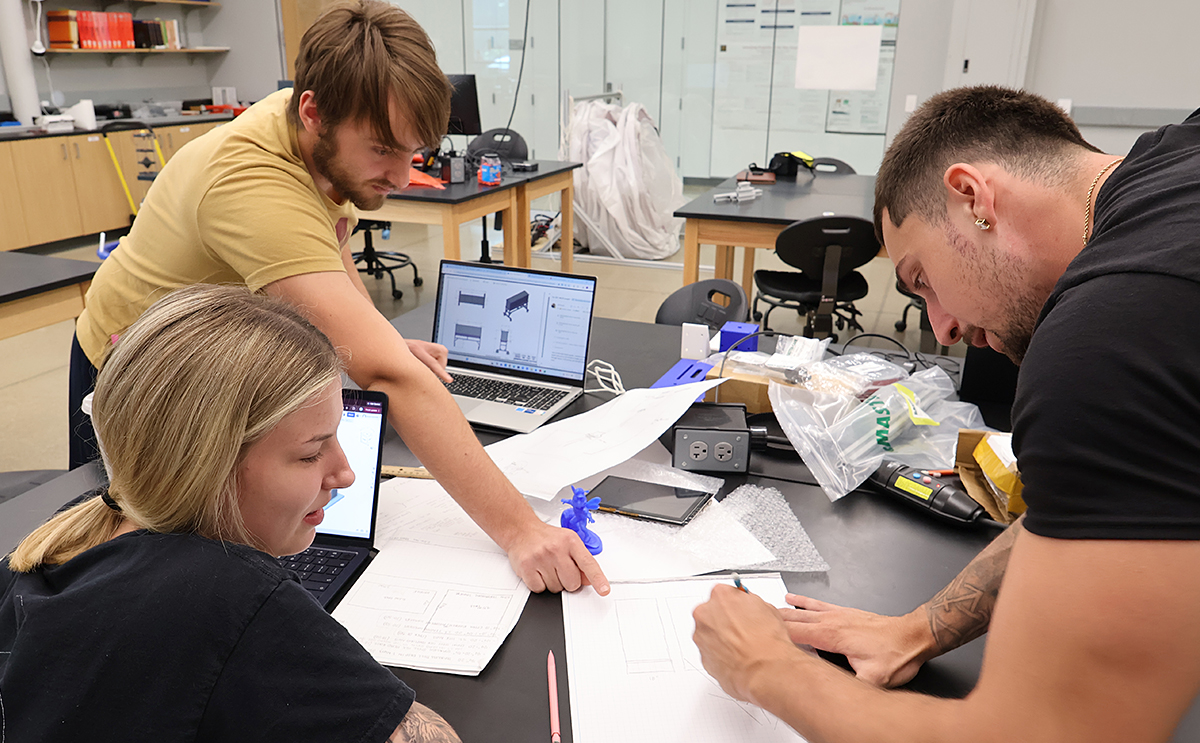
"My career goal is to secure an engineering role where I can apply practical problem-solving to real-world technical challenges. Opportunities like building this wave tank prepare me directly for that because textbooks can only teach you so much theory," noted the Olmsted Falls, Ohio, senior.
"Working on this project forces me to deal with real engineering constraints — like structural tolerances, material selection for aquatic environments and troubleshooting 3D prints — which teaches me how to adapt, solve unexpected problems and manage a technical project from concept to finish," she added.
The CLEAR project is a continuation of research BW students did in collaboration with the Port of Cleveland on dredge monitoring. The summer students include Matt Hamad and Elise Taylor, a Princeton University student who is working in the BW lab as an intern for Cuyahoga County's Fresh Water Institute and the Student Conservation Association's Water Economy Workforce Fellowship Program.
Baldwin Wallace is a founding member of the Fresh Water Institute. The summer Fellowship represents a collaborative effort to develop the region's freshwater stewardship.
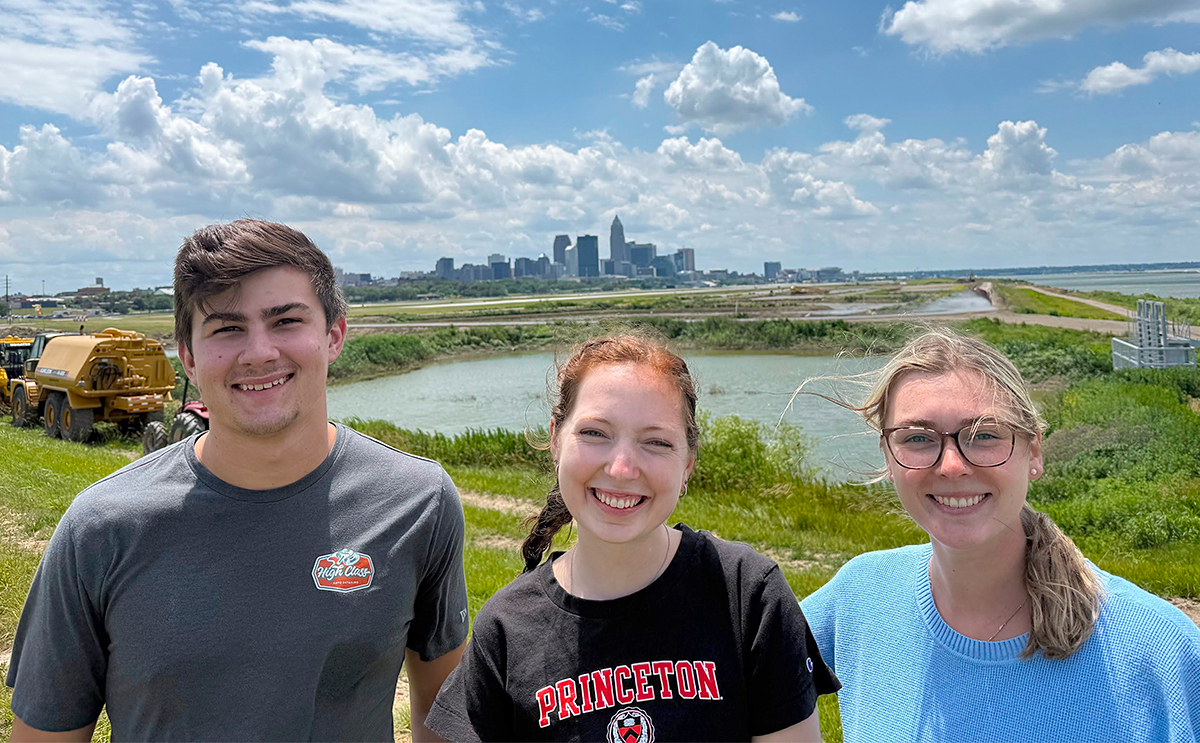
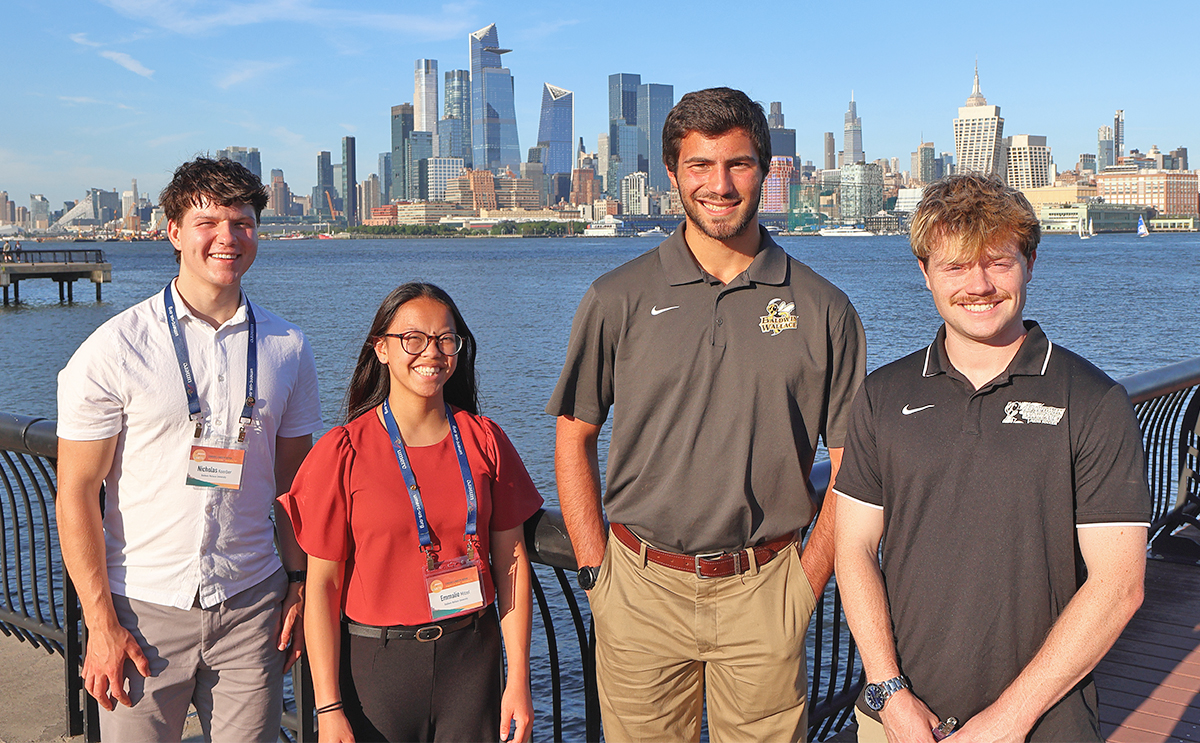
Also keeping engineering students busy this summer is initial work related to a $500,000 U.S. Department of Energy grant awarded to BW to design and test marine energy technologies with real-world applications for Lake Erie. Three BW students — Lucas Frye, Emmalie Mitzel and Brayden Beggs — are working on the UCD4LE project this summer.
"Summer research experiences are especially valuable because they allow students time and resources to deeply explore topics in a way that is not possible during the busy academic year," believes Dusek.
"Externally funded projects provide opportunities to develop new experimental skills, engage in iterative technology development and practice scientific communication through community outreach events," he added.
"In the Laboratory for Adaptation, Inclusion, and Robotics this summer, we have three projects with a common theme of marine technology — connecting BW students to Lake Erie, one of Cleveland's most vital resources," he noted.
"With our partners — Cuyahoga County Fresh Water Institute, Cleveland Water Alliance, Argonaut, Freeboard Technology, the Port of Cleveland — we are preparing students for careers in water technology and the Blue Economy," he said.